
Danielle Eiseman, PhD
Associate Director of the Cornell Health Impacts Core
Department of Public & Ecosystem Health College of Veterinary Medicine
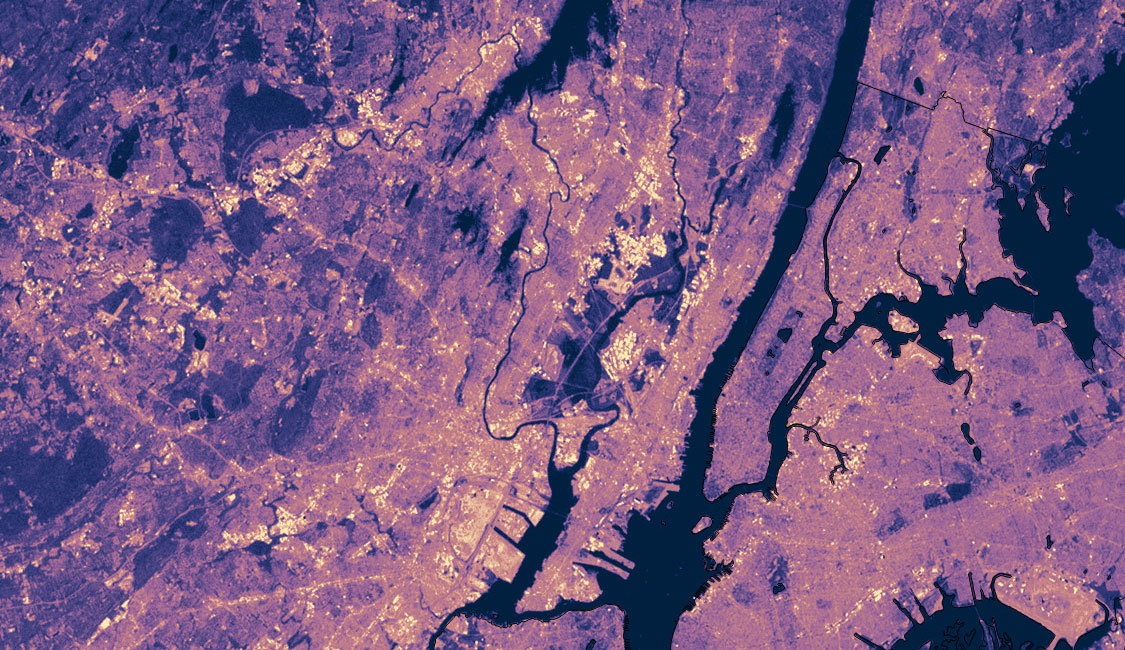
Older adults bear the brunt of extreme heat. This age group experiences more heat-related hospitalizations than any other. Climate change makes these risks worse.
The Cornell Initiative on Aging and Adaptation to Extreme Heat is dedicated to advancing research, policy, and practice to protect older adults from the health impacts of extreme heat in a changing climate. We conduct integrative research across clinical medicine, public health and the built environment sectors, spanning Cornell University's New York City and Ithaca campuses.
On this site, you can explore our latest projects and publications, learn about our partners, and access a curated collection of public data sets, models and visualization tools, and resources provided by city, state, and federal sources, NGOs, and university-based researchers.
Our 2024 Annual Report highlights the Initiative's research accomplishments, partnerships, and key findings on protecting older adults from extreme heat impacts.
Download 2024 Annual Report Associate Director of the Cornell Health Impacts Core
Department of Public & Ecosystem Health College of Veterinary Medicine

Professor of Computer Science and Associate Dean for Impact
Jacobs Technion-Cornell Institute Cornell Tech

Assistant Professor of Operations Research and Information Engineering
Jacobs Technion-Cornell Institute Cornell Tech

Assistant Professor of Medicine
Weill Cornell Medicine

Assistant Professor of Practice
Department of Public & Ecosystem Health College of Veterinary Medicine

Associate Director, Cornell Public Health Program, Associate Professor
Department of Public & Ecosystem Health College of Veterinary Medicine

Director of Clinical Innovation
Health Tech Hub Jacobs Technion-Cornell Institute Cornell Tech

Senior Research Associate
Urban Tech Hub Jacobs Technion-Cornell Institute Cornell Tech
This project will improve understanding of the medical needs of older adults in the context of extreme heat, identify and stratify the greatest at risk, and to evaluate how emerging digital health tools can be used to adapt to these needs. The research team will analyze health care claims data to understand differentiated healthcare demand among older adults during heat waves. These findings will frame an evaluation of how emerging digital health tools can be leveraged to reduce risk, harms, and cost for vulnerable patients during extreme heat exposure. This work will also inform future research priorities across the initiative.
This work seeks to support public health and emergency management officials in planning for and responding to extreme heat events. By developing acomprehensive understanding of the data and analysis needs of public health officials and emergency management, we can develop new tools and table-top scenario planning exercises to enhance collective capacities, stress test heat action plans, and identify gaps in access and service to highly-vulnerable older adults. Over time, these approaches can inform development of more robust solutions for coordinated management of climate risks.
This experimental prototype web app combines National Weather Service HeatRisk forecasts with CDC Heat and Health Index indicators in a unified, geo-referenced map of the United States. The tool allows users to search specific locations and overlay federal heat risk forecasts with community health vulnerability data. Users can adjust forecast dates, heat risk levels, and percentile thresholds to identify populations most at risk from extreme heat in their area.
View the map → By integrating facility databases with census, weather, and urban heat island data, we can identify 'cooling center deserts' and measure distances between population needs and existing centers. This analysis, led by Nikhil Garg and Emma Pierson, compares actual placement against optimal models while revealing demographic and geographic disparities. These insights can guide more equitable cooling center placement strategies, ensuring communities most vulnerable to extreme heat receive adequate access through data-driven resource allocation.
Our comprehensive data catalog brings together a curated collection of datasets, visualization tools, models, and resources specifically focused on extreme heat and its impacts on older adults.
The catalog includes resources from diverse sources including federal agencies (NOAA, CDC, EPA), academic institutions, municipal governments, and NGOs. Each resource is tagged with metadata to help you quickly find relevant data for your research, policy work, or advocacy efforts.
Browse by resource type, administrative level, sector, or domain to discover datasets on urban heat islands, health outcomes, climate projections, and more.
We work with a wide variety of government, civil society, and academic partners to advance research and policy on extreme heat and aging.
Whether you're a researcher, policymaker, advocate, or community organization, there are many ways to engage with our initiative and contribute to this important work.